
In conversation with Professor Shizhang Qiao
A research journey and the future of catalysis.
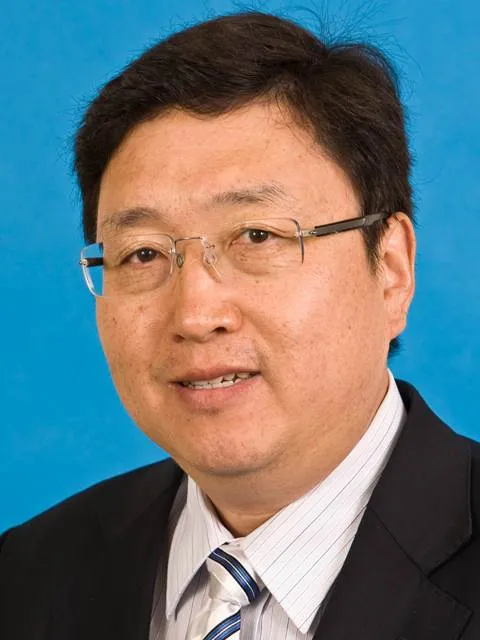
What does it take to push the boundaries of catalysis research? In this edition of In conversation with, Professor Shizhang Qiao, Editor-in-Chief of EES Catalysis, reflects on the scientific questions and ideas that have shaped his career. Here he discusses areas of research he is most excited about, and where he sees the greatest opportunity for transformative research. He also shares his perspective on what it takes for early-career scientists to make their mark and where he sees EES Catalysis in the future.
You've had a distinguished career in catalysis research. What key experiences prepared you for the role of Editor-in-Chief of EES Catalysis?
My career has always been driven by an interest in how fundamental materials science can be translated into solutions for important energy and environmental challenges. My early training in chemical engineering and nanomaterials gave me a strong foundation in understanding materials at the molecular and nanoscale levels. Over time, my research expanded across electrocatalysis and energy storage, which allowed me to see how closely connected these fields are and how much they can benefit from each other.
I try to look beyond a particular material or technique and ask what broader scientific question the work is addressing and what the community can learn from it.
Another important experience has been building and working with multidisciplinary teams. Many of the most interesting problems in catalysis or battery cannot be solved within one discipline. Progress often requires materials synthesis, advanced characterisation, theoretical modelling, and device engineering to come together. Collaboration has therefore been central to my research career and has also influenced the way I approach editorial decisions: I try to look beyond a particular material or technique and ask what broader scientific question the work is addressing and what the community can learn from it.
Like many researchers, one of the challenges early in my career was establishing an independent research direction in a rapidly evolving field. A lesson that has stayed with me is to focus on important scientific questions rather than simply following fashionable topics. Techniques and materials will change, but a meaningful scientific question can sustain a research programme for many years. I think this perspective has been particularly valuable in my role as Editor-in-Chief.
What distinguishes an EES Catalysis paper that really stands out?
I find the most exciting research to be work that challenges existing understanding of catalysis or pushes the boundaries of what can be achieved. I look for a clear scientific question, convincing experimental or theoretical evidence, and an advance that goes beyond incremental optimisation. A good paper should help us understand why a catalyst or catalytic system works, rather than simply demonstrate that it works. Rigour is equally important. Appropriate controls, meaningful benchmarking, reproducibility and careful interpretation of the data all give confidence that the conclusions will remain valuable beyond the particular system being studied.
Ultimately, the best papers leave the readers with a new concept, mechanism or way of thinking that can influence research beyond the specific catalyst investigated.
I am especially attracted to studies that connect different length scales, for example, linking atomic-scale structure and reaction mechanisms to catalytic behaviour under realistic operating conditions. Work that combines fundamental understanding with practical relevance can have a particularly broad impact. Ultimately, the best papers leave the readers with a new concept, mechanism or way of thinking that can influence research beyond the specific catalyst investigated.

EES Catalysis Outstanding Paper Award
Celebrating exceptional research published in EES Catalysis and the authors behind the work.
What emerging areas of catalysis research are you most excited about, and where do you see the greatest opportunities for transformative research?
One development I find particularly exciting is the transition from largely empirical catalyst optimisation towards more predictive and knowledge-driven catalysis. Artificial intelligence, machine learning, high-throughput experimentation and automated synthesis are beginning to change how we search chemical and materials space. However, I think their greatest impact will come when they are combined with fundamental chemical understanding rather than used simply as optimisation tools.
I also see a major opportunity in bridging the gap between catalyst-level discoveries and realistic devices and processes. Catalysts that perform exceptionally in idealised laboratory conditions do not necessarily retain that performance when incorporated into practical reactors. Understanding interfaces, mass transport, catalyst stability and dynamic restructuring under operating conditions will therefore become increasingly important.
More broadly, catalytic transformations associated with carbon, hydrogen and nitrogen cycles, sustainable chemical manufacturing, waste valorisation and integrated renewable-energy systems will continue to offer enormous opportunities. The most transformative research will often occur at the boundaries between traditional disciplines.
What advice would you give to early-career researchers looking to establish themselves in the field?
...a strong research career is built by consistently asking important questions, developing your own scientific judgement and producing work that the community can remember and build upon.
My first piece of advice would be to build your scientific identity around an important question rather than around a particular method, technique or fashionable topic. Technologies change quickly, but the ability to identify meaningful problems and ask the right questions is much more enduring. Of course, this does not mean that researchers should avoid new technologies or emerging areas. On the contrary, new tools and ideas can be extremely valuable, but they should serve the scientific question rather than define it.
I would also encourage early-career researchers to prioritise depth and quality over the number of publications. A smaller number of papers that tell complete and convincing scientific stories can establish a researcher's identity much more effectively than many incremental studies. Ultimately, I think a strong research career is built by consistently asking important questions, developing your own scientific judgement and producing work that the community can remember and build upon.
EES Catalysis is quickly establishing itself as a leading journal in the field. Looking ahead, what is your vision for EES Catalysis?
...to become a journal that researchers naturally think of when they have work that can genuinely influence the future direction of energy and environmental catalysis.
My vision is for EES Catalysis to become a journal that researchers naturally think of when they have work that can genuinely influence the future direction of energy and environmental catalysis. We want to maintain a very high standard of scientific quality while remaining broad and inclusive. Catalysis is inherently interdisciplinary, and the journal should provide a home for outstanding work across heterogeneous, homogeneous, molecular and biocatalysis, as well as thermo-, electro- and photocatalysis. Equally important is bringing together experimental science, theory, computation and engineering.
Looking ahead, I would particularly like to see more studies that bridge fundamental mechanistic understanding with realistic catalytic operation. AI-driven discovery, advanced operando characterisation, sustainable chemical manufacturing, integrated catalytic systems and device-level studies will all become increasingly important.
Editor’s Choice collection: Shizhang Qiao
Handpicked by Shizhang Qiao, this collection features five exceptional papers that reflect the latest advances in (nano)materials for energy technologies.