
Martin Fitzner, Adrian Šošić, Alexander V. Hopp, Marcel Müller, Rim Rihana, Karin Hrovatin, Fabian Liebig, Mathias Winkel, Wolfgang Halter and Jan Gerit Brandenburg.
Prize
Digital Discovery Outstanding Early Career Research AwardYear
2025
Citation
Paper: BayBE: a Bayesian Back End for experimental planning in the low-to-no-data regime
The Bayesian Back End (BayBE) was born at Merck KGaA from the merger of two independent Bayesian optimization projects. Anticipating a rapid increase in use cases benefiting from this technology, we unified these efforts to build an easy-to-use toolkit and scalable foundation. In doing so, BayBE became a blueprint for professional code development, also proving the value of open-source software in a traditionally guarded industrial setting.
Today, its footprint has expanded significantly, utilized by various companies across the chemical and pharmaceutical sectors, as well as by universities for research and teaching. Back at Merck KGaA, the internal BayBE ecosystem continues to rapidly evolve through comprehensive APIs, MCPs, and graphical user interfaces, alongside efforts to drive fully autonomous robotic lab equipment. To push these capabilities even further, our ongoing research focuses on enabling robust transfer learning, multi-fidelity optimization, hybrid search spaces, and adapting Bayesian optimization for sequence-based domains.
About the winners

Martin holds a PhD in Computational Physics from University College London (UCL). As Principal Data Scientist for Digital Chemistry he aims to unite the fields of cheminformatics, machine learning, computational chemistry, experimental planning and professional software development. Martin is one of the founders and main developers of BayBE and product owner for various related technologies at Merck KGaA.
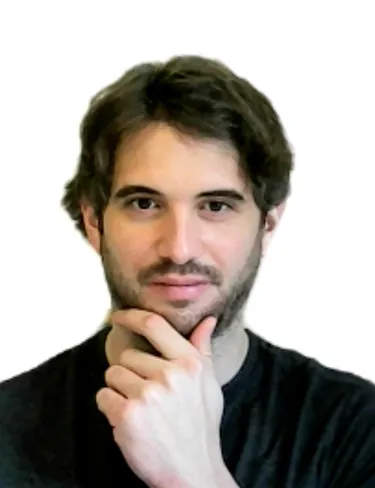
Adrian holds a PhD in Electrical Engineering from TU Darmstadt, with a research focus on probabilistic modeling, Bayesian methods, and machine learning. Driven by a deep passion for mathematics and software engineering, he channels these interests into his work as a creator and core developer of BayBE. As a Lead Data Scientist at Merck KGaA, his goal is to establish Bayesian optimization as an industry standard — bridging the gap between cutting-edge probabilistic methods and real-world experimental workflows.

Alex joined Merck directly after earning a PhD in Mathematics in 2020. As a Senior AI Research Scientist, he works at the forefront of cutting-edge technologies and leverages them for Merck KGaA. He is one of the founders and members of the BayBE Core Team, and contributes as a leading developer, maintainer, and product owner of the full BayBE ecosystem. In addition to BayBE, he participates in other interdisciplinary projects and supports them with his programming expertise.

Marcel holds a PhD in Theoretical Chemistry from the University of Bonn, where he developed efficient quantum-mechanical methods for molecular screening. After working with Merck KGaA on digital chemistry and Bayesian optimization workflows based on BayBE, he joined Alán Aspuru-Guzik at the University of Toronto, where he develops agentic AI systems for chemistry, early-stage drug discovery, and autonomous optimization.
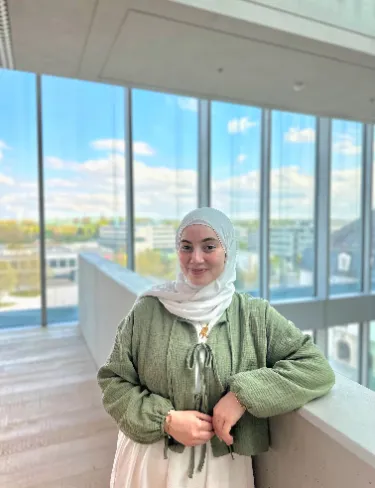
Rim holds a bachelor’s degree in Computer Science from Darmstadt University of Applied Sciences, earned through a dual-study program with Merck KGaA. She contributed to BayBE during a practical phase of her bachelor’s studies, where she helped develop an early-stopping criterion for BayBE based on model internal data and created a function to visualize PI iterations in a 3D plot. Rim is currently a Data Culture Manager responsible for community and enablement around myGPT Suite, Merck’s internal conversational AI, fostering user empowerment and responsible usage.

Karin is an applied machine learning researcher at Merck KGaA. She focuses on understanding how machine learning models interact with real-world data in order to advance commercially relevant use-cases. She worked in different biological domains, such as protein design and target identification with single-cell data, where she developed approaches for integration of different data sources and efficient protein candidate design with small training datasets. Besides, she is interested in entrepreneurial activities.

Fabian holds a bachelor’s degree in computer science from Darmstadt University of Applied Sciences, earned through a dual-study program with Merck KGaA. He first became involved with BayBE during the practical phase of his bachelor’s studies, where he developed a benchmarking package for BayBE, integrated it into the cloud-based evaluation pipeline, and contributed to the underlying cloud infrastructure. Fabian is currently pursuing a dual master’s degree while continuing his work with Merck KGaA. His focus is on benchmarking, evaluation, and software implementation within the BayBE ecosystem.

Being trained as a physicist, Mathias is inherently curious, which has driven him across numerous scientific fields—primarily in digital domains: large-scale numeric simulations of laser-plasma interactions, parallel-in-time methods, finite-element modeling of cardiac activity, commercial software development for particle simulations, brain-inspired AI research, modular automation for laboratories and production, and more. Today, Mathias leads the AI & Quantum Lab at Merck KGaA, Darmstadt, Germany. The team identifies and transfers disruptive technologies into the company to globally accelerate scientific discovery and production processes. One of these technologies is BayBE, in which Mathias serves as user voice and advisor.
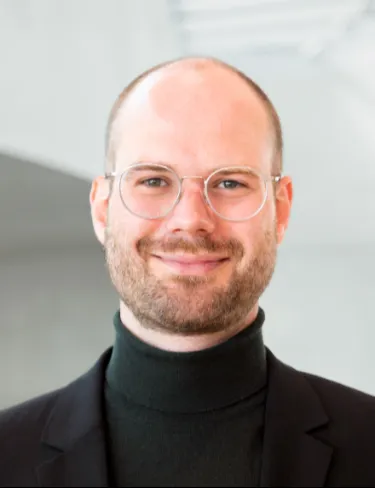
Wolfgang earned his Dr.-Ing. in Control Theory and Synthetic Biology at the University of Stuttgart, studying how feedback loops govern biological systems. At Merck KGaA, he heads a global team of 40 in AI, Data Science & Bioinformatics, building AI solutions across the full Life Science business. He contributes to BayBE in an advisory and strategic capacity, helping steer the project where it matters most.
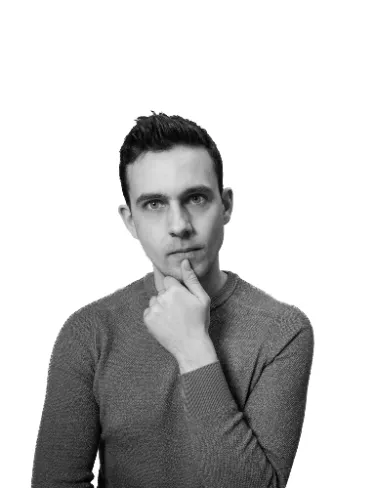
Gerit holds a PhD in Theoretical Chemistry from the University of Bonn and a master’s degree in Physics from Heidelberg University. He is Senior Director for AI & Automation in Drug Discovery at Merck KGaA, Darmstadt, Germany, where he builds AI-driven and automated discovery platforms connecting machine learning, computational chemistry, and lab automation. Previously, he led Digital Chemistry and helped scale computational and AI capabilities across the company. Gerit has authored more than 60 peer-reviewed publications and brings deep scientific expertise to the interface of computation, AI, and experimentation. He led the BayBE paper as a strong example of cutting-edge technology development with substantial relevance and traction in industry.
Related pages
Digital Discovery
A journal for new thinking on machine learning, robotics and AI.
Journal
Digital Discovery Outstanding Early Career Research Award
Recognising and celebrating outstanding contributions in the realm of Digital Discovery.
Prize
Publish with us
Get your work the international recognition that it deserves.