
What chemists should know about artificial intelligence in 2026
Get advice from our chief executive, explore key resources and learn about RSC FIRST 2026
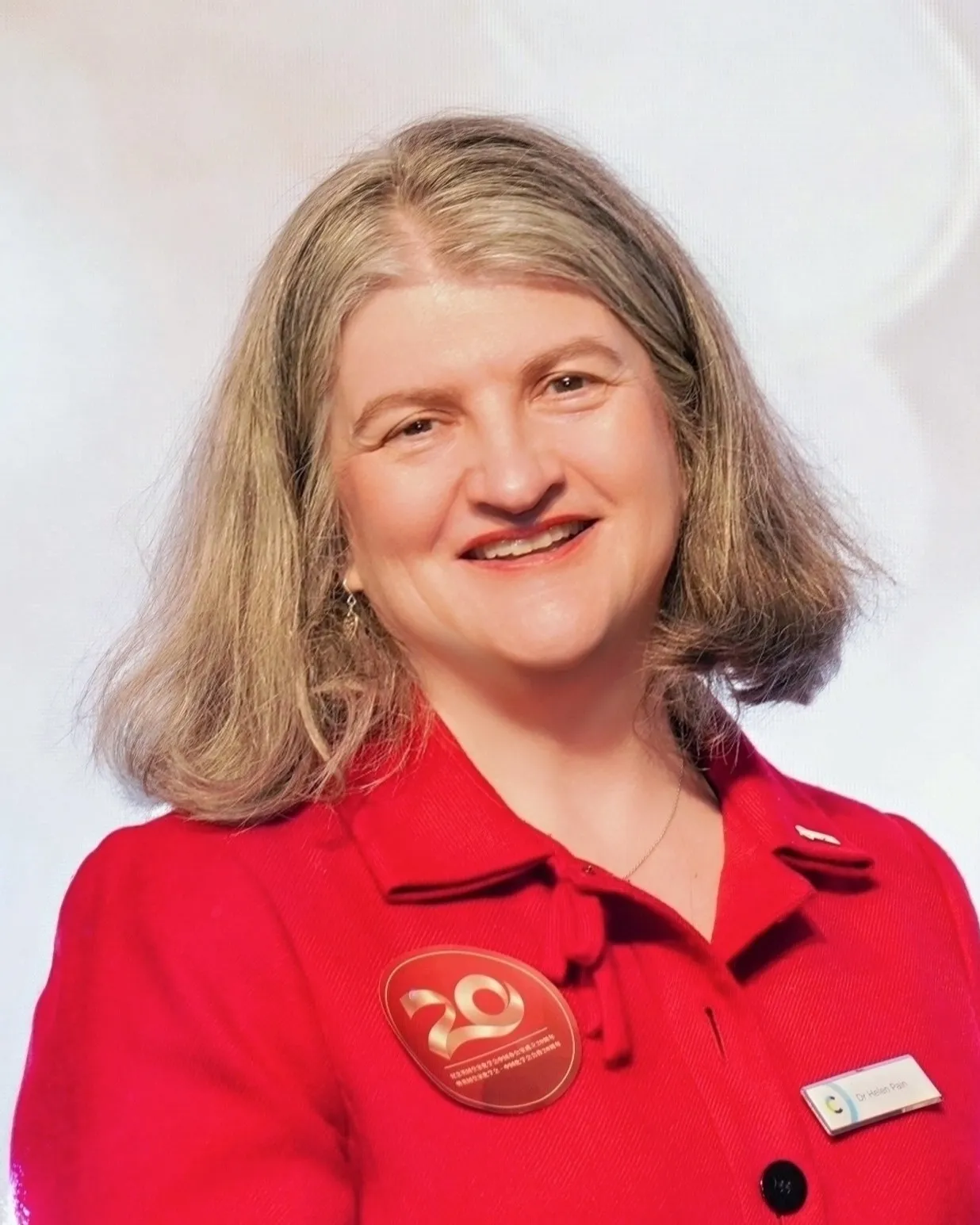
Dr Helen Pain
Artificial intelligence in chemistry is moving from a specialist topic into a core research capability. The question facing chemists is no longer whether AI will influence their work, but how they can use it effectively and responsibly.
We spoke to Helen Pain, chief executive at the Royal Society of Chemistry, to get her viewpoints on AI in chemistry. Read our interview with Helen and discover advice for the researcher community.
Why is 2026 a crucial time to discuss AI in chemistry?
AI in chemistry has moved beyond a specialist field and is now influencing almost every stage of the scientific process, from literature discovery and experiment planning to materials design and autonomous laboratories. At the same time, the technology is advancing faster than the community can fully absorb it.
2026 is therefore a pivotal moment. We have enough real-world examples to demonstrate impact, but we are still early enough to shape how AI develops in a way that is scientifically rigorous, ethical and globally beneficial.
You do not need to become a computer scientist. What matters is becoming an informed scientist who knows when and how to use AI effectively.
Helen Pain
Where do you see the most immediate commercial opportunities for AI in chemistry right now?
The most immediate opportunities are in areas where AI can significantly reduce the cost, time and risk of innovation.
Three stand out:
- Drug discovery. AI can rapidly screen and prioritise candidate molecules before they are synthesised and tested experimentally, accelerating the path to new medicines
- Materials innovation. AI is helping researchers design materials with specific properties, supporting applications ranging from batteries to catalysts and advanced manufacturing
- Industrial process optimisation. AI has immediate value in improving yields, reducing waste, lowering energy use and enhancing safety in chemical manufacturing
If I had to choose one area where commercial value is already becoming visible at scale, it would be the combination of chemistry expertise with AI-driven design and optimisation throughout R&D and manufacturing.
In 3–5 years, which 'AI in chemistry' breakthrough do you expect to move from the lab into real-world industrial application?
The breakthrough I would watch most closely is the integration of AI, automation and robotics into ‘self-driving labs’.
The individual technologies already exist. What is becoming possible is a closed-loop system where AI designs experiments, automation performs them, instruments analyse the results and the system learns continuously from new data.
Over the next three to five years, I expect this approach to become increasingly practical in industrial settings such as materials discovery, catalyst development and formulation science, where accelerating experimentation has direct commercial value.
RSC FIRST 2026: AI in Chemistry
Join us in Xiamen, China in November at RSC FIRST 2026: AI in Chemistry. This in-person event will be a chance for our global community to come together and learn from our incredible line-up of speakers (including Nobel Prize laureate, Omar Yaghi).
Travelling from outside of China? If you are joining us from any of these countries, then you won’t need to get a visa. You can also apply for our travel support, which provides a partial or full waiver of the registration fee or a contribution to the cost of accommodation. There is an application process as we are only able to support a limited number of participants.
Chemistry is entering a new era in which scientific insight, digital technologies and human creativity are becoming inseparable. RSC FIRST 2026 is an opportunity for the global community to shape that future together.
Helen Pain, Steering Committee, RSC FIRST 2026
Looking back, what is the first AI tool or skill you wish you had learned at the start of your PhD?
Rather than a specific tool, I would have wanted to learn how to use AI for navigating scientific knowledge.
Learning how to use AI-enabled literature tools to identify relevant sources and synthesise information, while still applying scientific judgement, would have helped me spend less time searching for information and more time developing my understanding.
What advice do you have for a mid-career scientist who feels AI is leaving them behind? How should they start engaging meaningfully?
My first message would be: don’t panic.
Chemistry expertise remains essential. In fact, the more powerful AI becomes, the more valuable domain knowledge and critical thinking become. Everything I read repeatedly emphasises the importance of human oversight, scientific judgement and interdisciplinary collaboration.
A practical approach is:
- start with a real problem from your work rather than with the technology itself
- experiment with AI tools for literature review, data analysis or experimental planning
- invest a little time in understanding the strengths and limitations of AI outputs
- engage with training opportunities and communities of practice
You do not need to become a computer scientist. What matters is becoming an informed scientist who knows when and how to use AI effectively.
Further reading
Accelerated chemical science with AI
S Back, A Aspuru-Guzik, M Ceriotti et al. Digital Discovery 2024; 3: 23–33. https://doi.org/10.1039/d3dd00213f
The findings, ideas, comments, and often contentious opinions expressed during four panel discussions related to the respective general topics: ‘Data’, ‘New applications’, ‘Machine learning algorithms’, and ‘Education’ from ASLLA Symposium, Gangneung, Republic of Korea.
Image and data mining in reticular chemistry powered by GPT-4V
Z Zheng, Z He, O Khattab et al. Digital Discovery 2024; 3: 491–501. https://doi.org/10.1039/d3dd00239j
This work highlights the potential of AI in accelerating scientific discovery by bridging the gap between computational tools and experimental research.
Comparison of LLMs in extracting synthesis conditions and generating Q&A datasets for metal–organic frameworks
Y Shi, N Rampal, C Zhao et al. Digital Discovery 2025; 4: 2676–2683. https://doi.org/10.1039/d5dd00081e
The findings reveal the potential of LLMs to aid in scientific research, particularly in the efficient construction of structured datasets, which can help train models, predict, and assist in the synthesis of new metal–organic frameworks (MOFs).
Data-efficient machine learning for molecular crystal structure prediction
S Wengert, G Csányi, K Reuter et al. Chem. Sci. 2021; 12: 4536–4546. https://doi.org/10.1039/d0sc05765g
This paper presents tailored Δ-ML models that allow screening a wide range of crystal candidates while adequately describing the subtle interplay between intermolecular interactions such as H-bonding and many-body dispersion effects. The presented workflow is broadly applicable to different molecular materials, without the need for a single periodic calculation at the reference level of theory. We show that this even allows the use of wavefunction methods in CSP.
An automated evaluation agent for Q&A pairs and reticular synthesis conditions
N Rampal, D Joe Fu, C Zhao et al. Digital Discovery 2026; 5: 231–240. https://doi.org/10.1039/d5dd00413f
The agent presented here provides a robust and reproducible tool for evaluating Q&A pairs and synthesis conditions in a scalable manner and can serve as a foundation for future developments in automated evaluation of LLM inputs and outputs and more generally to create foundation models in chemistry.

How to Use Machine Learning in Chemistry: An Introduction
By Hugh M. Cartwright. Drawing on examples from chemistry, this book covers topics including the mechanics of networks and training, representations in chemistry and solving issues with data. With a focus on practical implementation and how to ensure that your applications are robust, this is a fantastic starting point for anyone looking to incorporate machine learning into their work.

AI Revolution in Chemistry
By Brian McKew. Written for practising chemists (not data scientists), this book keeps chemical intuition at the centre while providing just enough AI to be dangerous—in the best way. The result is a concise, actionable primer that stays relevant as tools evolve, helping teams design, pilot and scale projects across discovery, development and GMP.