
€200bn-a-year PFAS clean-up effort could only address less than 2% of emissions, study finds
Ambitious clean-up plans costing billions annually could clear under 2% of PFAS as a new study shows remediation alone can't tackle the global crisis.
Vast spending increases dedicated to removing forever chemicals from Europe's soil, waterways and landfill sites would do little to solve the underlying crisis, according to a major new study in our Environmental Science: Processes & Impacts journal.
Evidence published in the new article - titled ‘PFAS Remediation Across Europe: Costs and Limited Impacts’ – reaffirms our belief that investing in remediation alone is not sufficient to tackle the forever chemicals problem. It also illustrates the urgent need for greater control at source as global PFAS emissions continue to rise.
The research provides one of the most comprehensive estimates to date of how much PFAS – per- and polyfluoroalkyl substances – could realistically be recovered from the environment through remediation. Even under the most ambitious investment scenario in which billions of pounds were invested annually, the study finds, less than 2% of current PFAS emissions could be addressed.
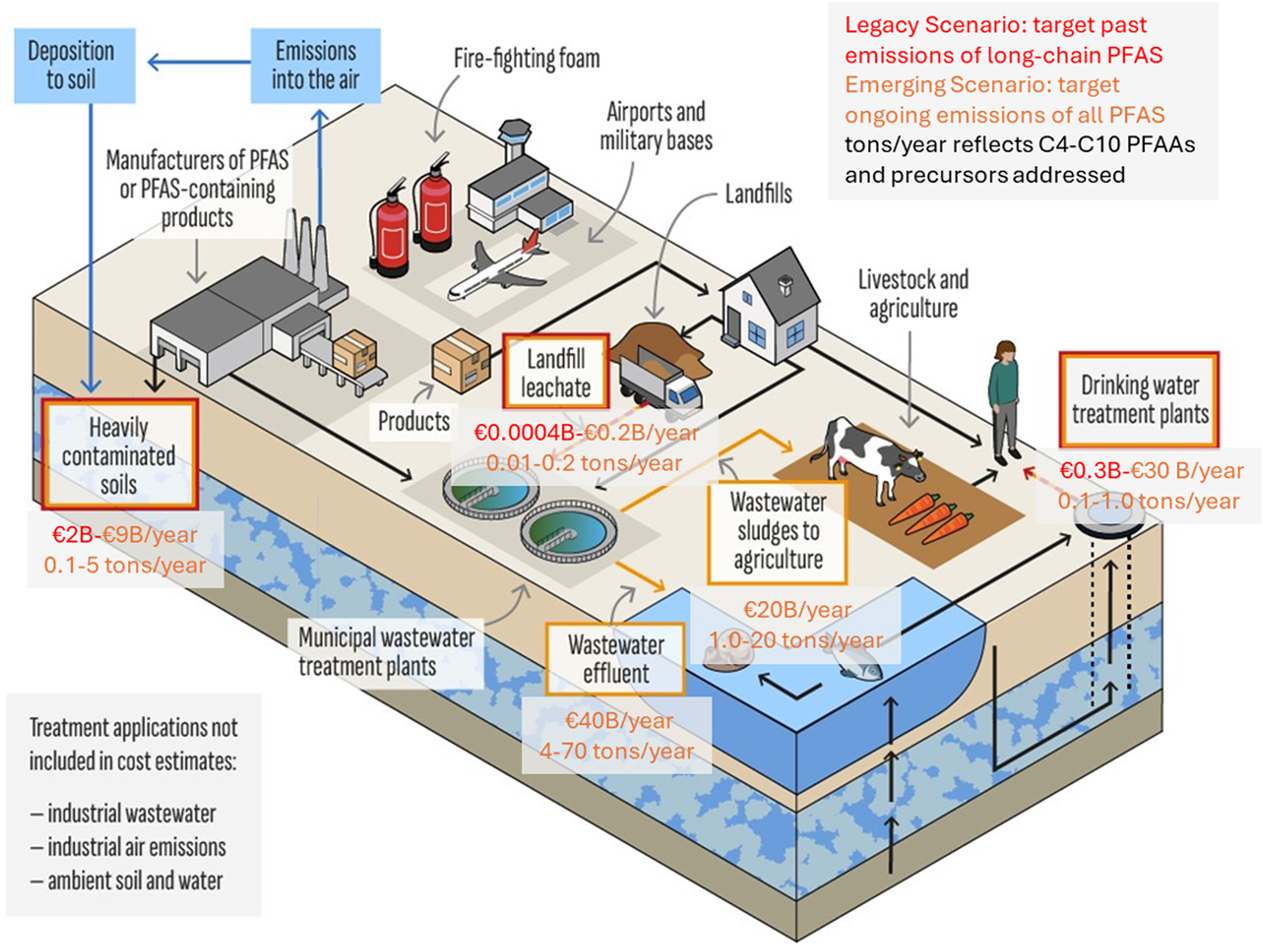.png?language=en&width=1263&resizemode=force&format=webp&v=639189439794642323 "PFAS remediation article - graphic (3)")
Remediation of past long-chain PFAS in Europe would cost €1–6 billion annually, while ongoing clean-up costs for emerging PFAS would cost €50–200 billion. Even then, only between three and 50 tons per year are removed, which is negligible compared to current emissions. Graphic produced by Léa Girardot.
Reacting to the findings, Stephanie Metzger, Policy Advisor on Sustainable Chemicals at the Royal Society of Chemistry, said the research confirmed a multifaceted approach is needed to reduce the harms caused to human health and the environment by PFAS.
“This study highlights the reality that, given the scale of PFAS contamination and the extreme persistence of these chemicals, remediation without upstream action cannot deliver a meaningful reduction in environmental pollution,” she said.
While targeted clean-up remains important for managing local contamination hotspots and reducing exposure risks, the greatest benefit will come from preventing emissions in the first place. Ultimately, preventing pollution is far more effective than trying to remove these chemicals once they have spread through the environment.
Stephanie Metzger
Ms Metzger and the report’s authors noted that investment in remediation is still valuable but is unlikely to be effective in isolation due to the prohibitive costs associated with it. In places where PFAS contamination is at its most concentrated, targeted clean-up remains critical to reducing residents’ exposure and protecting human health.
However, the proliferation of PFAS emissions – which are growing annually around the world – risks leaving governments and industry facing an escalating clean-up bill. The research reiterates our position that source control and remediation must work as a package, not as alternatives to one another.
Ms Metzger added: “The findings reinforce the need for governments to take decisive steps to reduce releases of PFAS throughout their lifecycle and, where their use continues, to ensure robust controls on production, use and disposal.”
Huge gap between investment and impact
PFAS are prized for their durability – they have heat, water and grease-resistant properties among others – and their adaptability, as they are used in everything from food packaging to firefighting foam. Those same properties, however, make them extraordinarily difficult to destroy once released.
Forever chemicals have also been linked with a range of adverse health outcomes in humans, particularly those exposed to high concentrations over prolonged periods of time. These included several cancers, liver damage, thyroid disease and fertility problems, as well as developmental problems affecting unborn children.
This new study was led by Alison L. Ling (the University of St Thomas in Minnesota, USA), alongside Hans Peter Arp (the Norwegian Geotechnical Institute and NTNU, the Norwegian University of Science and Technology). Together with investigative journalists from the Forever Pollution Project – Raphaëlle Aubert and Dr Stéphane Horel of Le Monde, and Eurydice Bersi of Reporters United – they set out the scale of the financial challenge involved in soil, landfill, wastewater and drinking water remediation.
Cleaning up legacy pollution alone – that is, assuming emissions stopped completely and no more PFAS entered the environment – would cost between €1.1 billion (£942 million) and €6 billion (£5.14 billion) per year. However, as emissions continue to rise and newer, more mobile forms of PFAS are proving harder to remove, the true cost of addressing ongoing contamination could balloon to between €52 billion (£44.5 billion) and €200 billion (£171.3 billion) per year.
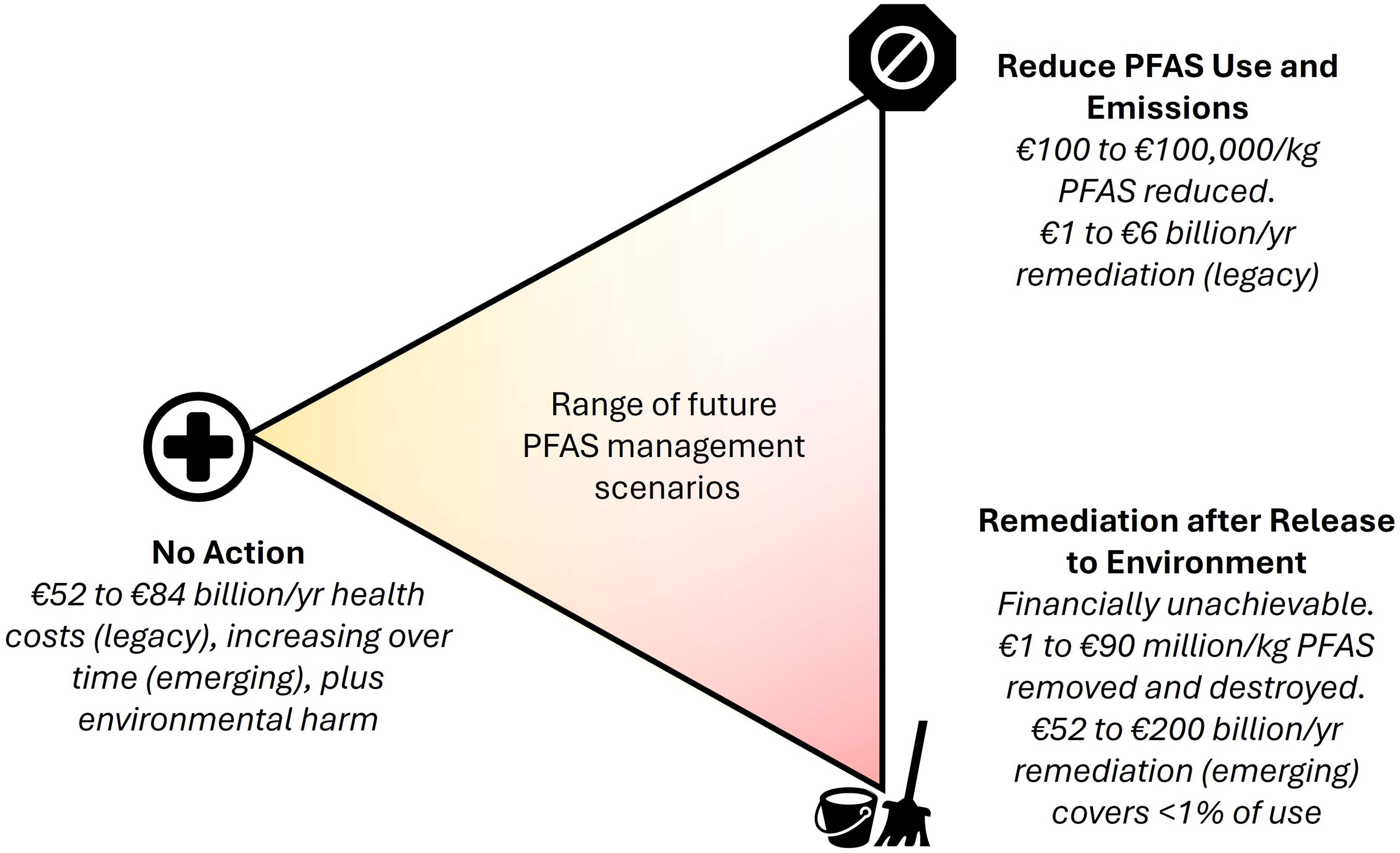.png?language=en&width=3773&resizemode=force&format=webp&v=639189439796598179 "PFAS remediation article - graphic (1)")
The range of societal approaches to PFAS management and associated costs as per the new research
However, despite the staggering annual outlay, even the most aggressive remediation efforts would address less than 2% of current PFAS emissions.
We are making so much PFAS, and they are so persistent and mobile that remediation alone cannot keep pace with ongoing emissions. Clean-ups make sense where they meaningfully reduce exposures and health risks, but even unprecedented spending on remediation could not significantly reduce the amount of PFAS already in the environment.
Professor Alison L. Ling
The study highlights the growing importance of ultra-short chain PFAS, such as trifluoroacetic acid (TFA), which are particularly difficult to remove and increasingly prevalent. These compounds represent an extreme case of environmental accumulation and further amplify remediation challenges and costs.
“The implication that less than 2% of current PFAS emissions can be remediated may seem surprising at first,” added Professor Arp, “but when you see the increasing amounts of PFAS, particularly TFA, accumulating in forests, groundwater, grasslands, food-supply systems, ecosystems, and even in our own blood, it makes sense.
“We cannot remove PFAS from trees, lakes and our cereals. The world is becoming increasingly polluted with diffuse PFAS pollution that will forever change the chemistry of the planet and can never be remediated.”
The findings demonstrate that remediation alone cannot provide a practical or affordable solution. Instead, the authors call for a paradigm shift towards reducing PFAS production and emissions by developing safer alternatives and redesigning industrial processes and products.
The authors argue that an investment of around €50 billion annually in PFAS prevention, alternative development, product redesign and emissions reduction could be justified when compared with the estimated future costs of PFAS-related health impacts (€52–84 billion per year; £44.5 billion to £71.8 billion per year) and remediation (€52–200 billion per year; £44.5 billion to £171 billion per year).
Efforts ongoing to protect UK drinking water quality
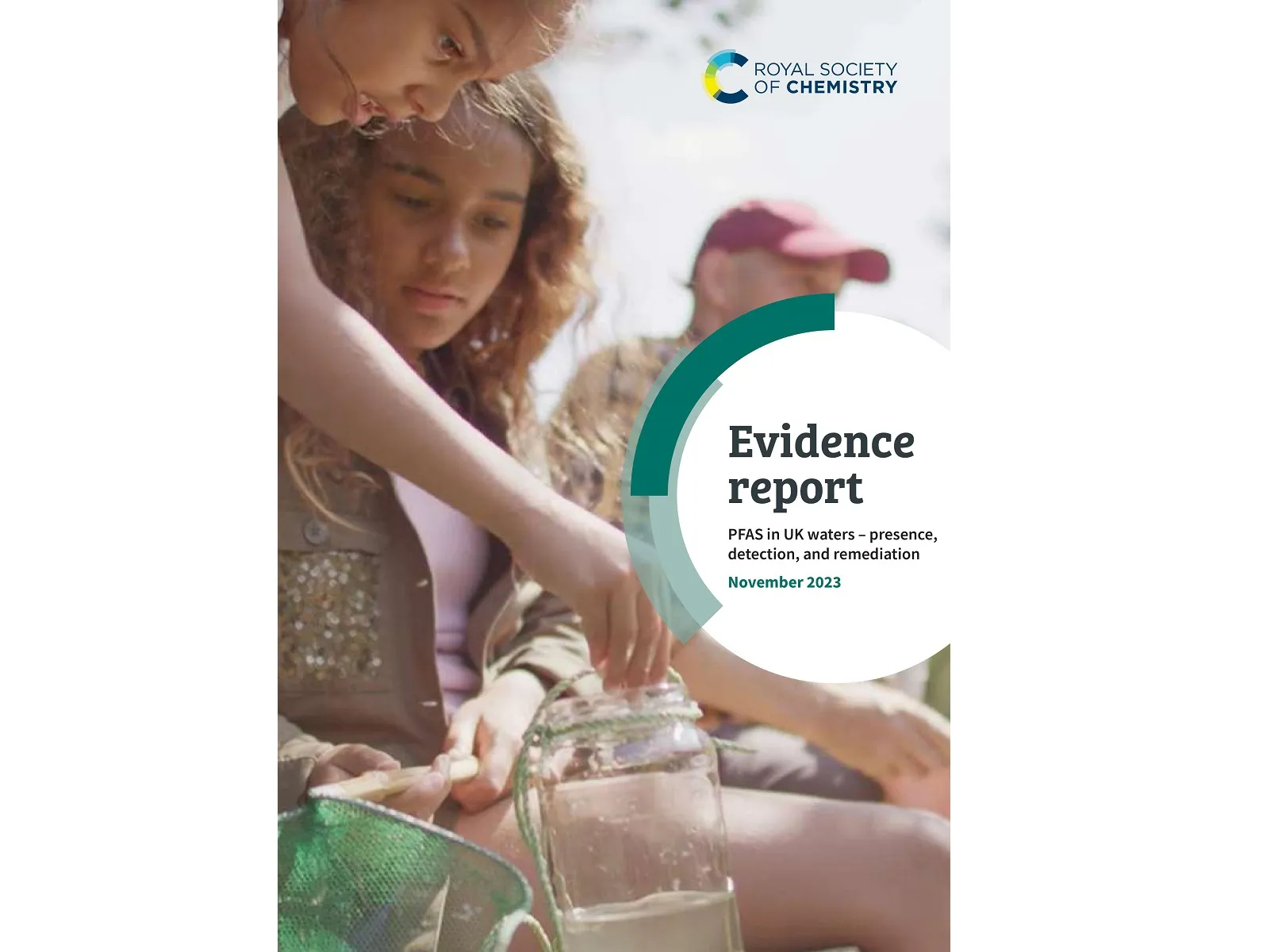
Such findings reiterate our campaigning for stronger controls on PFAS in UK drinking water, as we call for a reduction in the maximum allowable concentration from 100 ng/L to 10 ng/L. Our policy position is that both tackling contamination at source, alongside targeted clean-up where it is needed most, is the only combination that actually reduces long-term risk to health and the environment.
As the professional body for the chemical sciences in the UK, we believe our community has a central role to play in designing the safer alternatives necessary to implement a source-control strategy. We have several ongoing activities to support this aim.
Our Environmental and Sustainability journals are calling for papers for a themed collection on PFAS alternatives, inviting researchers developing replacement chemistries, safer product designs and industrial processes that reduce reliance on PFAS to submit their work. The following journals will jointly host the collection:
- Environmental Science: Advances
- Environmental Science: Atmospheres
- Environmental Science: Nano
- Environmental Science: Water Research & Technology
- Environmental Science: Processes & Impacts
- RSC Sustainability

Meanwhile, our Change Makers accelerator programme is supporting eight businesses tackling PFAS as they focus on capture, clean-up and alternatives. Through the scheme, we will provide tailored financial and business support to these deep tech chemistry start-ups over the course of the next year.
Over the coming months, each venture will work with a mentor from the Change Makers network of chemistry entrepreneurs for a series of one-to-one sessions. They will also be offered masterclasses on technology, routes to market and investor readiness, and given access to peer groups and professional advisers.
As part of Change Makers, we are also supporting innovation through the Emerging Technologies Competition (ETC). This team is seeking applications for a new category, the Change Makers Spotlight Prize. The award will highlight innovative solutions to tackle PFAS, as well as sustainable polymers in liquid formulations (PLFs), as part of this year's edition of the competition.
The winner of the Change Makers Spotlight Prize will receive £2,000 as part of the £50,000 overall ETC prize pot this year, with the winners to be announced in London on 21 July.
Join us in tackling the ‘forever chemicals’ crisis
- Working on safer alternatives to PFAS? Submit to our Environment and Sustainability journals' themed collection on PFAS alternatives.
- Read our policy page on our efforts to clean up UK drinking water.