
Nobel Prize for Chemistry: Henri Kagan and Kenso Soai honoured for their work on asymmetric organic synthesis
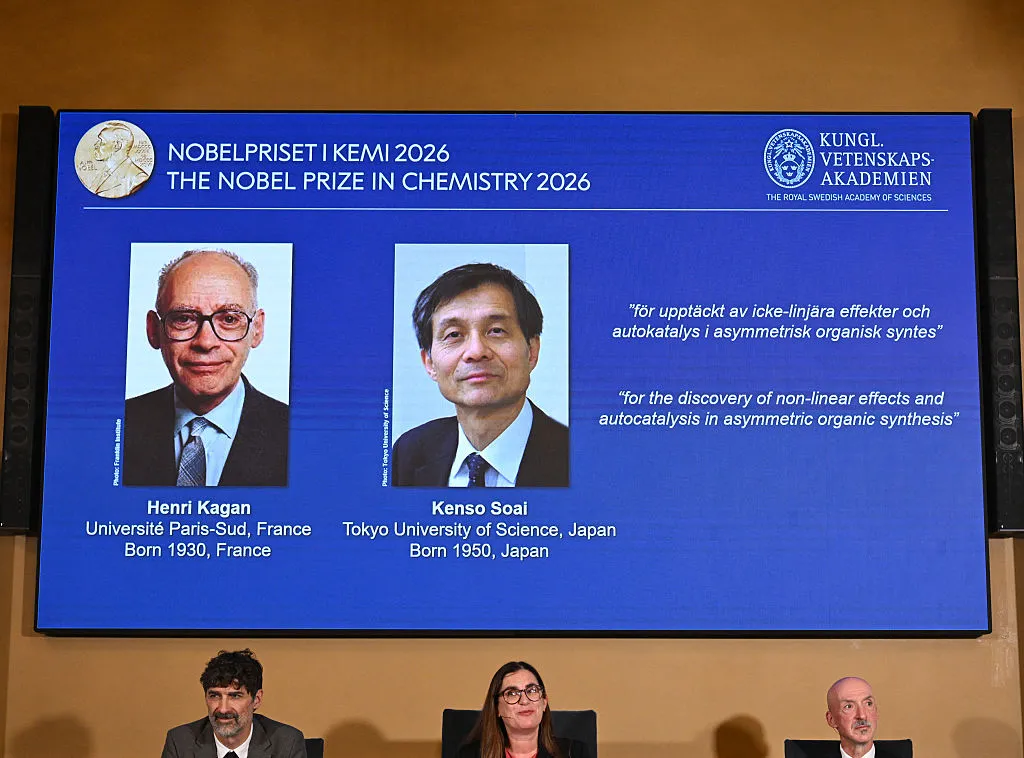
The pair have been awarded the 2026 Nobel Prize for discoveries that have enabled chemists to drive chemical reactions that lead to homochirality.
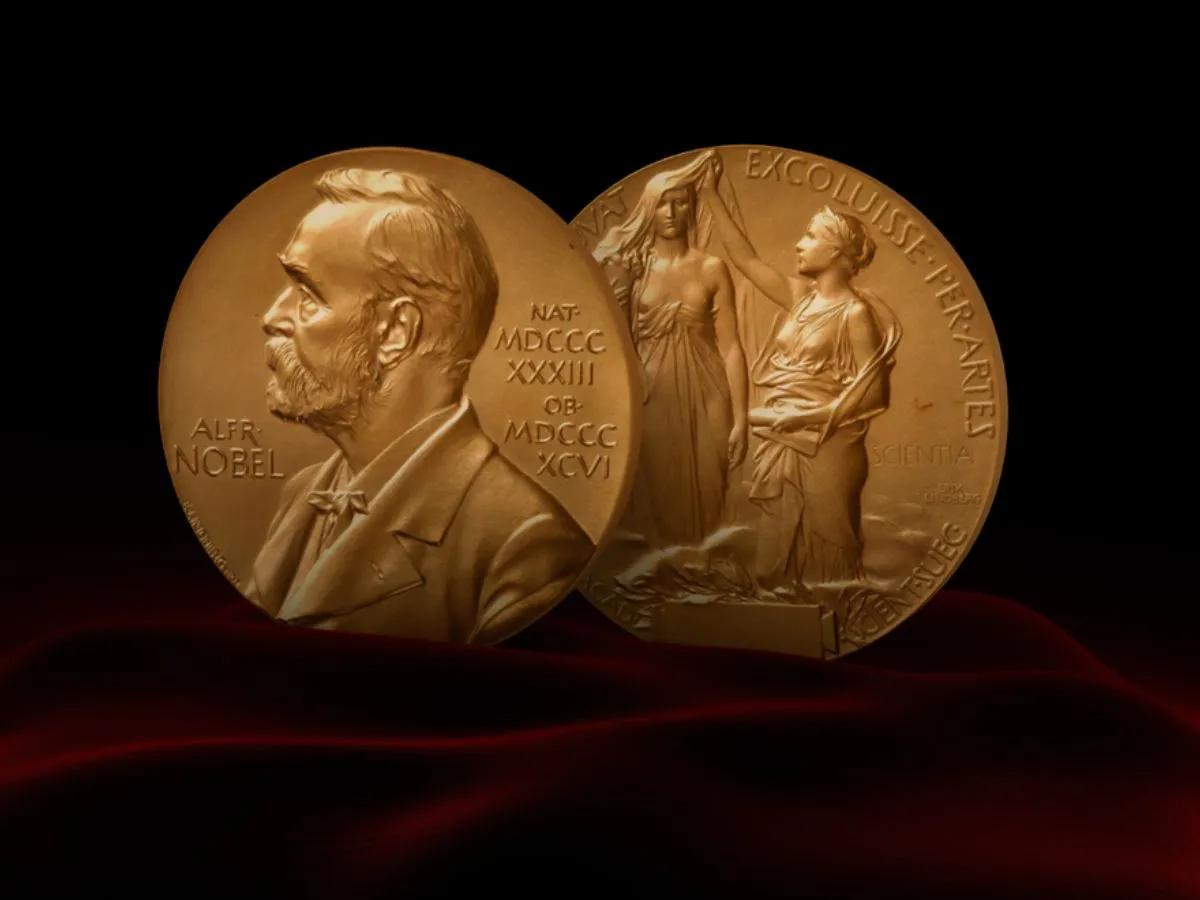
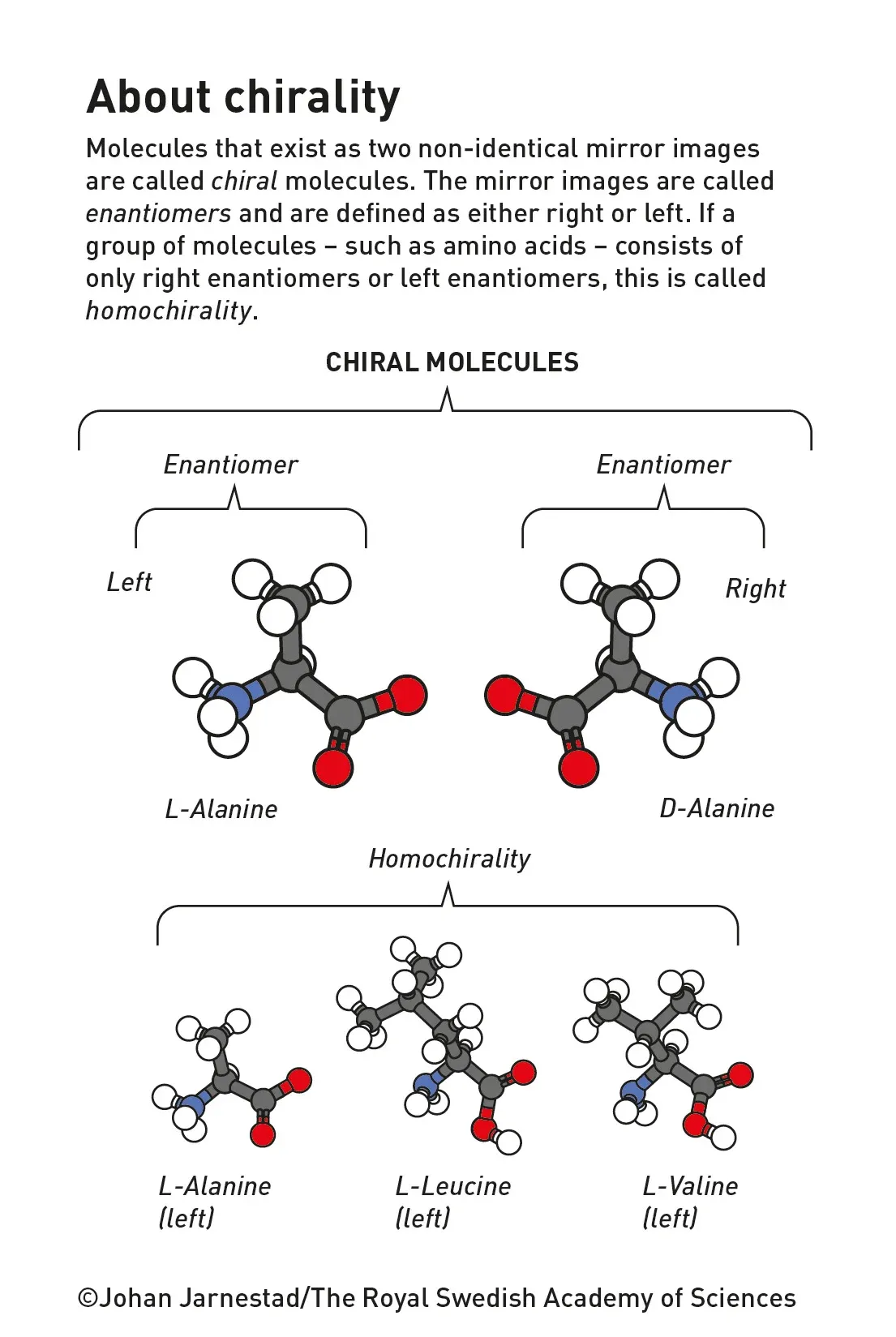
The research of Professors Kagan and Soai, from France and Japan respectively, solves a century-old problem about chirality - which relates to the property of an object not being identical to its reflection, or mirror image. Their work has essentially answered the question of why life favours one mirror image molecule over the other.
The discovery is hugely significant for chemical scientists who design reactions for the manufacture of pharmaceuticals.
"Many of the drug molecules occur in two variants that are each other's non-identical mirror image: one has the therapeutic effect, while the other can cause unnecessary and sometimes harmful side effects," the Nobel Foundation said.
.jpg?language=en&width=1600&resizemode=force&format=webp&v=639269681479095962 "Robert Mokaya in the Council Room (smaller file)")
RSC President's reaction to pioneers' triumph
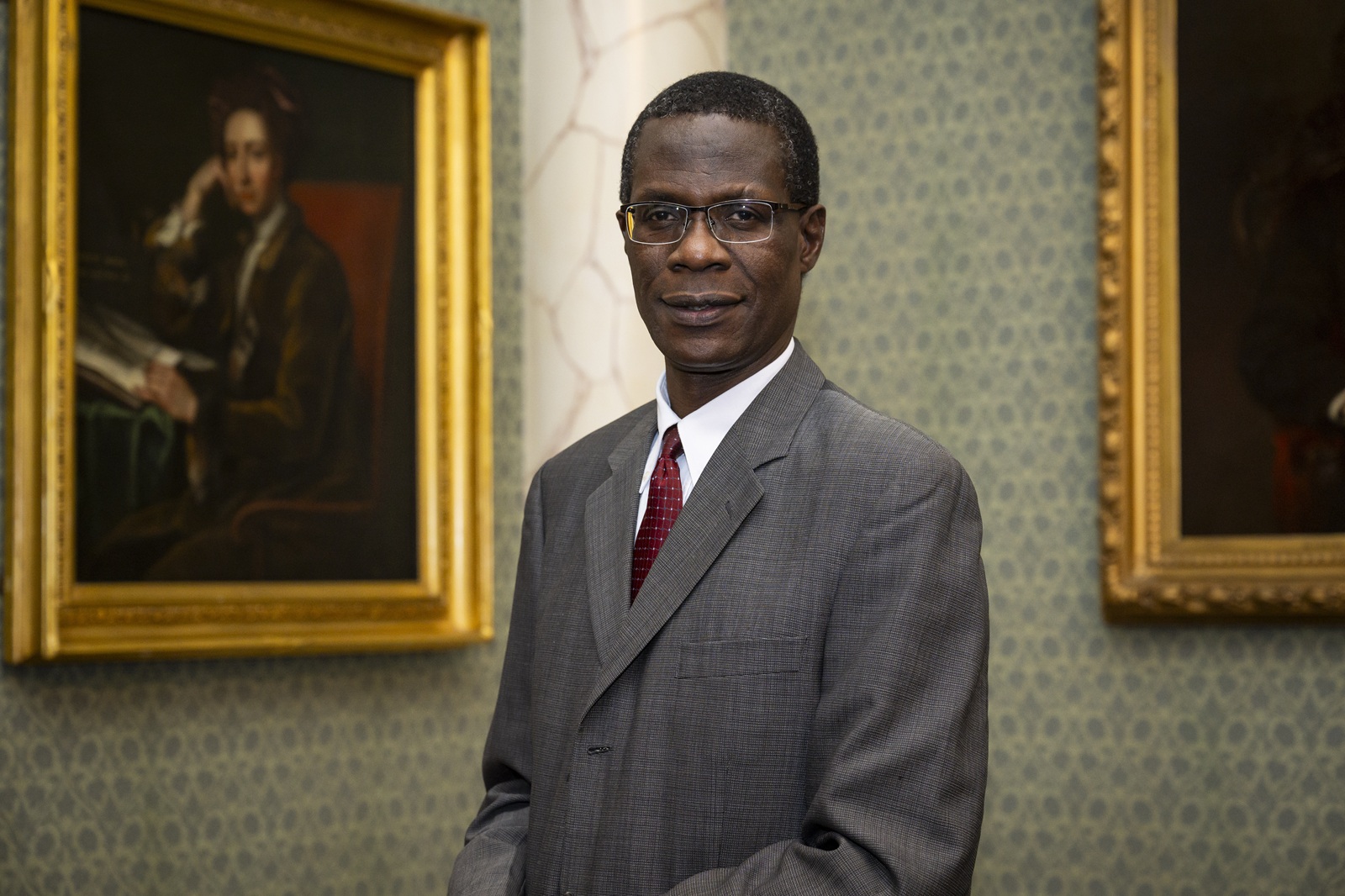
Professor Robert Mokaya, President of the Royal Society of Chemistry, hailed the contribution of Professors Kagan and Soai and emphasised this year's work once again highlights the difference chemistry can make when it comes to tackling the biggest global challenges faced by society.
Asymmetric organic synthesis is a powerful example of how fundamental chemistry can underpin solutions to some of the biggest challenges facing society. Different isomers can have completely different biological and physical effects, so are crucial in finding effective medicines to treat all sorts of illnesses.
I add my congratulations to Henri Kagan and Kenso Soai on this hugely deserved honour from the Nobel Prize committee. Twenty-five years on from William S. Knowles, Ryoji Noyori, and K. Barry Sharpless' 2001 Nobel for catalytic asymmetric synthesis, it's wonderful to see Kagan's contributions honoured.Professor Robert Mokaya
"And while science is an international enterprise, here in the UK, chemistry-using industries contribute over £60 billion per year to our economy, so supporting education and innovation in this vital sector is hugely important if we want to continue to train the next generation of Nobel Prize winners.
"From my point of view, this is the best week in the media calendar, in which we scientists get such freedom to be unapologetic cheerleaders for science and the impact it has – scientific endeavour sets such a positive example for our governments and our leaders, with truly international partnerships, the sharing of knowledge and a genuine commitment to make things better."
A success decades in the making
Professor Kagan and Soai were announced as this year's winners by the Royal Swedish Academy of Sciences in Stockholm this morning. They will share the 12 million Swedish kronor (£904,000) prize for their ground-breaking work, as well as each receiving a diploma and a medal.
The pair's first decisive step came in 1985 when Université Paris-Sud academic Professor Kagan discovered a new way of manipulating chemical reactions. This allowed him to create more of one of the mirror images than had previously been thought possible.
Professor Soai, of the Tokyo University of Science, advanced the work in 1995 by publishing research that described how he designed the first ever chemical reaction that had the potential to be homochiral. Eight years later, he finally succeeded, presenting a reaction in which only one of the two possible mirror images formed - the first time mankind had been able to achieve such an outcome.
"This is the most exciting day in my life, I am very glad to share this prize with professor Henri Kagan," said Professor Soai, who had been out shopping when he received the news.
When asked why his work is so important, he explained: "Chirality is essential, it is a prerequisite to the origin of life, so we are very glad to find some organic reaction that explains homochirality. Of course this is not the final answer. This field should be performed more and more to understand life and, of course, life science is very important but in many cases, people take it for granted that amino acids are there."
Our prize this year should make people recognise the importance of the chirality of molecules so I am especially glad about that. For the next generation, the study of chirality should develop even more and more.
Professor Kenso Soai
Why is Kagan and Soai's work so significant?
Dr Phillip Broadwith, from the Royal Society of Chemistry's Chemistry World magazine, said: “The concept of chirality is best explained by looking at how your hands are mirror images of each other. Incredibly, molecules that are mirror images can have completely different effects on biological systems, such as our bodies, which also have handedness.
“This prize recognises work that goes to the very fundamental level of understanding how we can control which 'hand' of a molecule we make, which is crucial for making things like drugs or even flavours and fragrances. It also helps to explain a possible way that all the chiral molecules on earth – our proteins, sugars and biomolecules, settled into one specific handedness rather than the other, so it's fascinating science.”
Professor Heiner Linke, the chair of the Nobel Committee for Chemistry, added: "Henri Kagan and Kenso Soai have provided a solution to a chemical mystery that is over a century old: how homochirality can emerge spontaneously. The chemical reactions they have developed are spectacular."
The pair's triumph means 118 chemistry prizes have been given to 200 laureates since Dutch physical chemistry Jacobus Henricus van't Hoff received the inaugural prize in 1901. Henri Kagan also becomes the 67th person to have previously been awarded a Royal Society of Chemistry Prize (he won the RSC Centenary Prize in 1999/2000) and go on to receive a Nobel Prize.
How does it work?
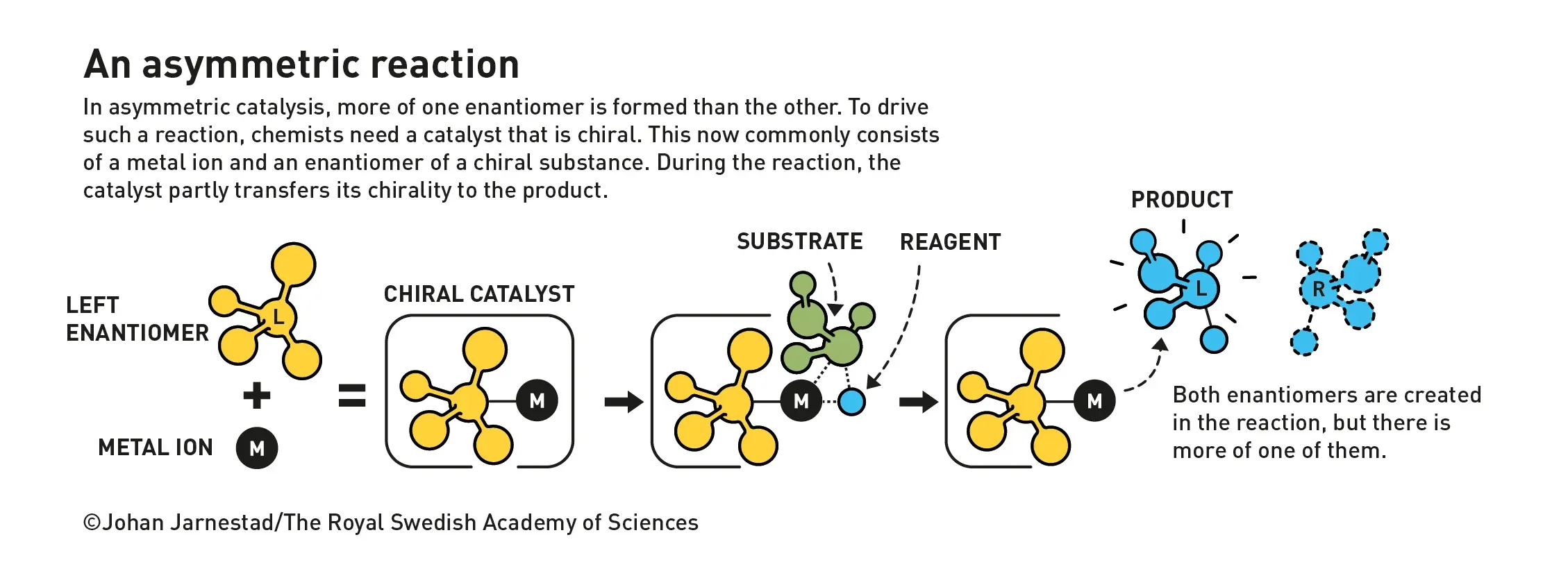
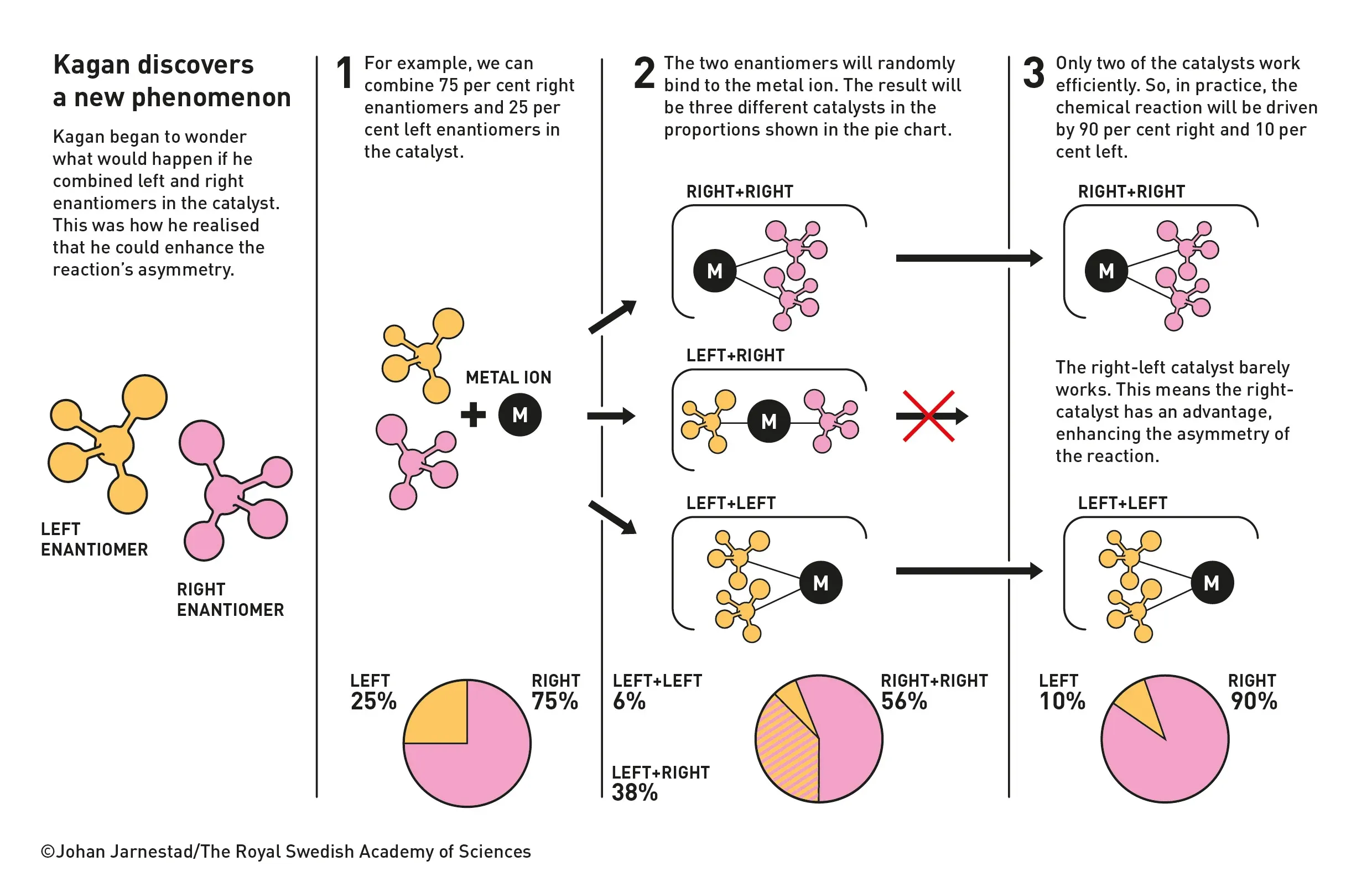
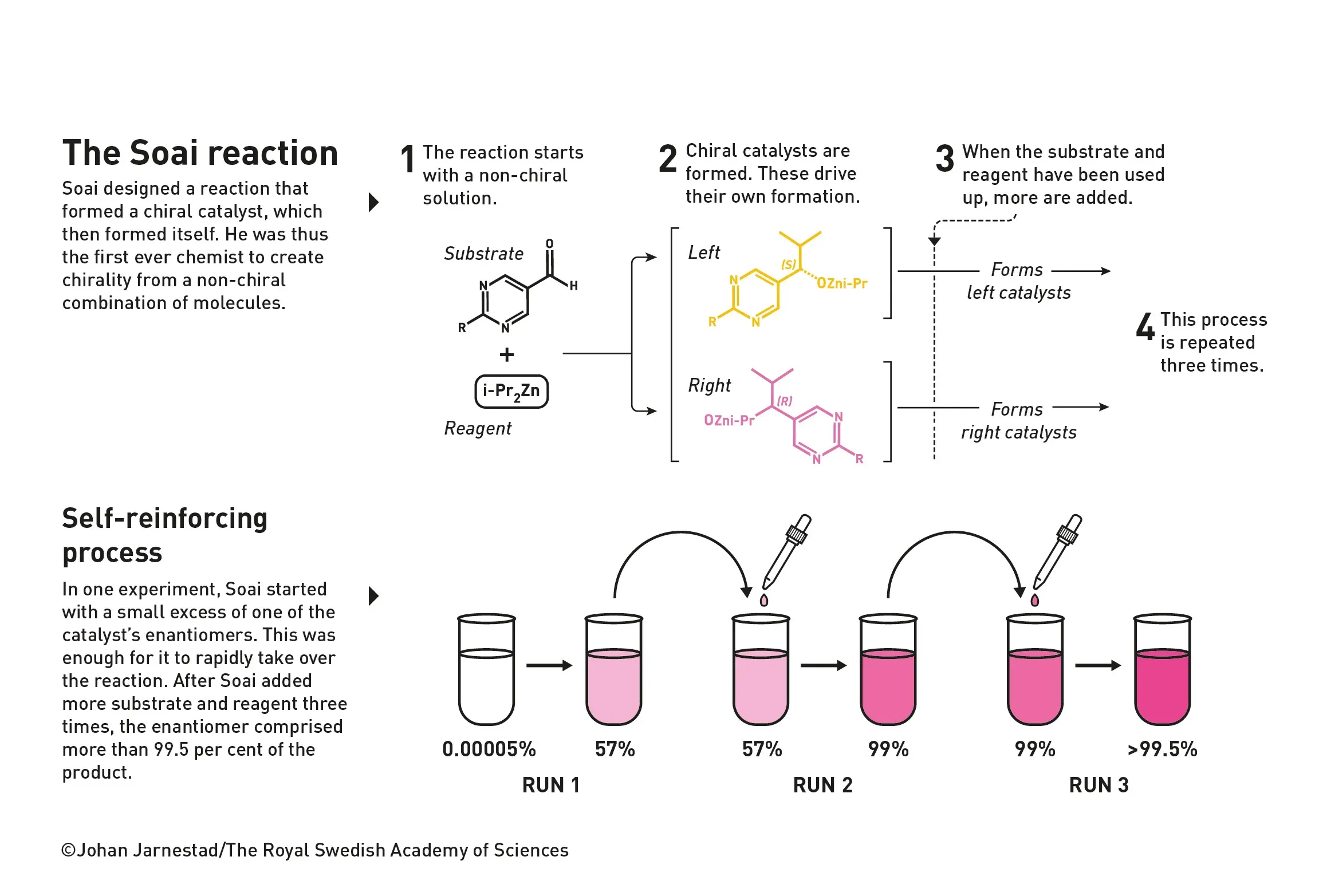
Watch the ceremony
Get more reaction
- Chemistry World is running a live blog, giving readers extra insight into this year's honouree.
- Register for a special webinar as a panel of special guests join Chemistry World writers to discuss the ground-breaking work recognised by the committee in Sweden.