
In conversation with Dirk Guldi
Professor Dirk Guldi shares insights from a career at the intersection of light, energy and materials.
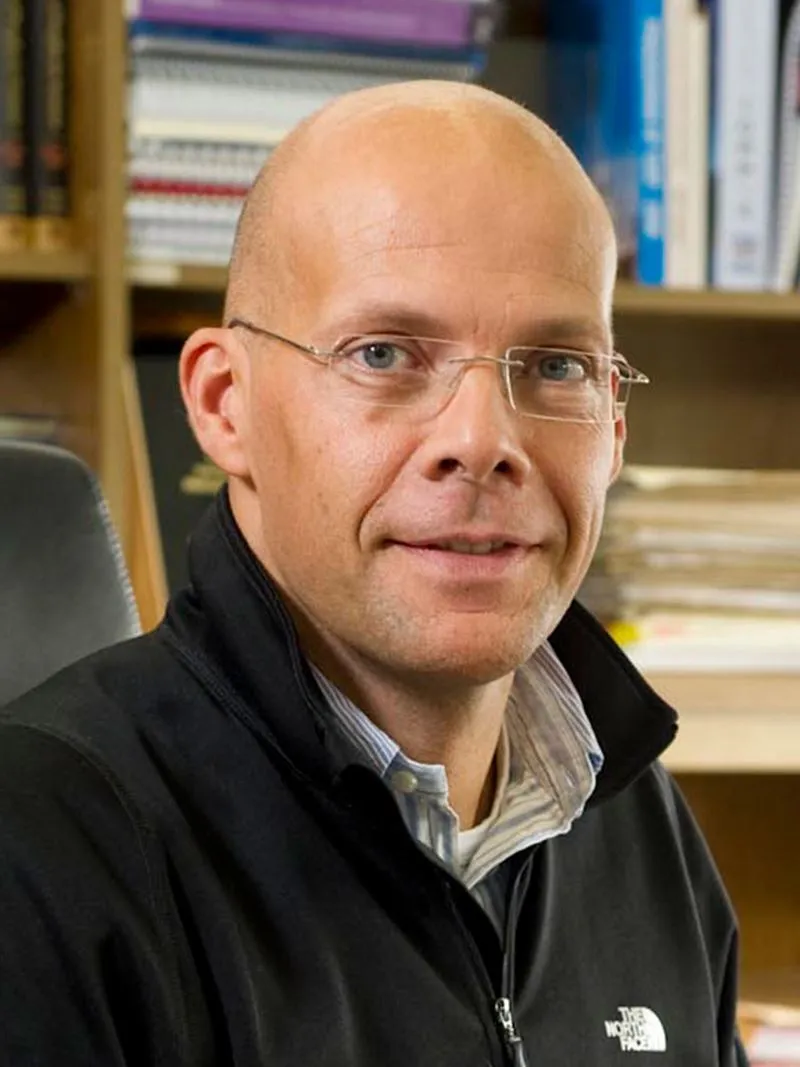
From advancing solar energy conversion to building international research collaborations, Professor Dirk Guldi shares insights from a career at the intersection of light, energy and materials. As a long-standing contributor to the RSC community, including through his roles on several journal advisory boards, he brings a wealth of experience to this In conversation with… interview. Here, Dirk reflects on his experience with the Royal Society of Chemistry, offers advice on strengthening research networks and shares practical tips for communicating research and making your work stand out.
Please tell us about your background, career and research interests
My career in chemistry began at the University of Cologne and has since taken me across Europe, Israel and the United States, before I joined Friedrich-Alexander-Universität Erlangen-Nürnberg (FAU) in 2004. Along the way, I have had the opportunity to work in a wide range of research environments and build an international network of collaborators, experiences that have strongly influenced my approach to science.
Since my graduate studies, I have been deeply fascinated by the science of solar energy conversion and its potential to address global energy challenges. This enduring interest ultimately led me to join the faculty of the Notre Dame Radiation Laboratory at the U.S. Department of Energy, where I have been able to pursue fundamental research at the intersection of light, energy and materials. A defining feature of our work in the Guldi Group has been an interdisciplinary, integrated-systems approach, bringing together complementary expertise from across science and engineering to address complex research questions.
The most successful collaborations create genuine scientific synergies.
Collaboration has therefore been central to my career. I see it as more than simply combining different areas of expertise: the most successful collaborations create genuine scientific synergies, while allowing researchers to maintain and develop their own scientific identities. This approach has been a feature of my research from the outset, including early work with international collaborators such as Maurizio Prato.
Explore Dirk Guldi's research
Discover more research from Dirk Guldi and his collaborators, published by the Royal Society of Chemistry.
Explore his RSC publications
You have had a long-standing relationship with the Royal Society of Chemistry, including serving as an Editor-in-Chief of Nanoscale and Nanoscale Advances. What has your experience with the RSC and its journals meant to you?
As Editor-in-Chief and a member of several Editorial Boards, I had early access to cutting-edge research submitted by early-career scientists from around the world. This allowed me to spot emerging talent, track promising researchers at the forefront of their fields, and engage with them early in their careers.
Particularly memorable was awarding emerging investigators in nanoscience, not only to highlight their work but also to propel their careers.

Nanoscale 2025 Emerging Investigators
Nanoscale is proud to present this themed collection highlighting 2025’s rising stars of nanoscience and nanotechnology research.
What are some of the common mistakes you see authors making when submitting manuscripts, and how could they be avoided?
A few recurring issues can make it harder for editors and reviewers to quickly understand the value of a manuscript. A manuscript should be interesting, understandable and relevant to a large and diverse group of readers. A weak title or abstract, for example, can obscure the significance of the work, while a poor cover letter may fail to communicate why the manuscript matters and reduce its chances of passing the initial editorial screening.
Authors should also take care when suggesting reviewers. An unbalanced list can create perceptions of bias, reduce credibility and potentially lead to editorial distrust.
Finally, missing citations or inconsistent citation styles can distort the perception of novelty and reduce recognition of previous research. Careful attention to these details can make a significant difference.
What advice would you give to early-career researchers looking to establish themselves in the field?
Dream big, stay curious, and see where it takes you!
Anything is possible (!) – so dream big, stay curious, and see where it takes you (!). But never underestimate what it takes to turn ambition into achievement. Discipline, dedication, resilience and patience are essential, as is the courage to keep going when the going gets tough.
If anything, having more substantial exposure to industry beyond the two internships I completed during my undergraduate studies would have been key to developing a deeper appreciation of industrial needs beyond R&D.
What are your top tips for effectively communicating research findings, both in publications and to a wider audience?
Broad and impactful dissemination of scientific results is essential, but the appropriate approach largely depends on the specific context, whether the results are communicated through oral presentations or peer-reviewed publications. Still, it takes combining presentations at national and international conferences with invited departmental seminars and high-quality peer-reviewed publications in flagship journals of the RSC and beyond.
A common denominator is a compelling research challenge or vision. A prime example is our high-impact research on Singlet Fission, which integrates organic synthesis, quantum-chemical calculations, and advanced physicochemical characterization to drive fundamental insights and advance the field. Singlet Fission is a process where one molecule absorbs a single photon, shares that energy with a neighboring molecule, and creates two excited molecules instead of just one. Think of it like a "buy one, get one free" sale for solar energy. Taking this multifaceted approach is key to ensuring that research findings reach and engage the wider scientific community.
What strategies have you found most effective for building a strong research network?
It is important that each person's unique contribution is valued, visible and appropriately credited.
I believe a strong research network comes from bringing together a complementary mix of scientific expertise, allowing everyone to maintain and strengthen their own scientific identity while creating meaningful synergies across disciplines. The most rewarding point is when different disciplinary perspectives no longer simply coexist but become genuinely integrated into a shared understanding of the problem.
It is important that each person's unique contribution is valued, visible and appropriately credited. This creates an environment in which individual expertise can thrive while contributing to a shared scientific vision.
One example of this approach is reflected in my long-standing collaborations. Over the course of 25 years of research, I have co-authored well over 100 publications with each of Maurizio Prato in Trieste, Nazario Martín in Madrid and Tomás Torres in Madrid.
Explore more of Dirk's recent collaborative research:


Discover more research published across our Nanoscience journals

Nanoscale Horizons
Urgent short reports of exceptionally high quality and innovative nanoscience and nanotechnology.
Nanoscale
A high impact, peer reviewed journal publishing experimental and theoretical work across the breadth of nanoscience and nanotechnology.

Nanoscale Advances
An open access journal publishing across the breadth of nanoscience and nanotechnology.