
Cleaning up oil with smarter polymers: why pore design is changing the game
Fundamental polymer chemistry research contributes directly to water security and environmental resilience
Removing oil from water is one of the most persistent challenges in environmental protection - from headline-grabbing marine spills to the quieter but constant burden of solvent-contaminated industrial wastewater. As pressure mounts to safeguard water resources in line with UN Sustainable Development Goal 6: Clean Water and Sanitation, the need for materials that are not just effective, but scalable and reusable, has never been greater.
Research published in RSC Applied Polymers points to an unexpected solution: redesign the material from the inside out. A team of researchers from Austria show that the key to exceptional oil uptake is not simply increasing hydrophobicity but precisely engineering pore architecture within hypercrosslinked polymers (HCPs).

Read the research
You can read the research paper "Hypercrosslinked polymers for oil adsorption: the influence of porosity and fluorine incorporation”, in RSC Applied Polymers, an impactful platform for the application of polymers, both natural and synthetic, including experimental and computational studies.
High capacity, real-world relevance
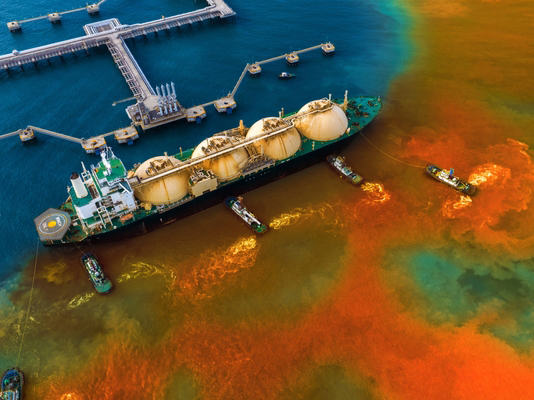
The performance is striking. Optimised polymers achieved adsorption capacities exceeding 15 grams of chlorinated solvent per gram of material, alongside more than 99% removal of toluene from water in oil–water separation tests. Just as importantly, the materials retained their performance across reuse cycles - a critical factor for economic and environmental viability.
These are not incremental gains. They signal a pathway toward lightweight, high-capacity sorbents that could enhance oil spill remediation technologies and improve the treatment of solvent-laden industrial effluents.
Rethinking adsorbent design
Fluorination is a well-established strategy for promoting oil affinity in polymer sorbents. But by systematically varying both fluorine incorporation and pore structure, the researchers were able to disentangle chemistry from architecture - revealing that pore volume and connectivity exert the strongest influence on adsorption performance.
Rather than focusing primarily on functional group modification, future materials development may prioritise structural precision: tuning pore size distribution and internal morphology to maximise uptake.
From laboratory chemistry to scalable solutions
Hypercrosslinked polymers offer a practical advantage. They combine high surface areas and chemical robustness with synthesis routes based on commercially accessible building blocks. That makes scale-up more realistic than for many advanced nanostructured materials.
For academic researchers, the study provides a compelling structure–property case study. For industry scientists, it highlights a promising platform for deployable sorbent technologies. For policymakers, it underscores how fundamental polymer chemistry contributes directly to water security and environmental resilience.
As regulatory frameworks tighten and sustainability goals sharpen, materials innovation will play a defining role. By placing pore architecture at the centre of adsorbent design, this work offers a clear and actionable direction for next-generation environmental polymers.

Explore more papers on UN SDG for clean water and sanitation
This study is part of a collection dedicated to highlighting impactful work taking place across the world to meet the United Nations Sustainable Development Goal 6: Clean Water and Sanitation. Articles in this collection showcase the efforts of our chemical scientists in meeting this global need, from providing innovative measures to detect and extract harmful chemicals from the worlds water sources, to developing sustainable methods in sanitation and waste management.
Recent progress in the development of porous polymeric materials for oil ad/absorption application
This review provides an overview of the recent developments in the processing of polymer foams and melt-blown fiber-based porous polymeric materials for oil absorption properties
Application of chewed gum for treating oil sands tailings and adsorbing organic dyes and heavy metal ions
Investigating the use of waste chewing gum as an environmentally problematic waste product for use as a sorbent for treating tailings pond water from the Alberta oil sands
Fenton photocatalytic sponges for rapid separation of emulsified-oil/dyes
This study provides an alternative and effective solution for the problem of oil/dye contamination in complicated wastewater